Understanding Orkin Mites: Impact on Agriculture


Intro
Agriculture is a multifaceted discipline, integrating science, technology, and the art of nurturing the earth. One often overlooked yet vital component of this ecosystem is the Orkin mite. These tiny arachnids play a unique role in the health of agricultural systems, offering both benefits and challenges that can significantly affect crop vitality and soil quality.
In this guide, we aim to unfold the intricate tapestry of Orkin mites—examining their biological traits, influence on crops, and viable management strategies to balance their presence. Understanding these organisms isn't just a matter of curiosity; it’s an essential part of sustainable farming practices that can elevate productivity.
So, let’s dive in and peel back the layers of this often misunderstood player in the agricultural arena.
Intro to Orkin Mites
The exploration of Orkin mites is vital for comprehending the intricate dynamics of agricultural ecosystems. These tiny creatures may often go unnoticed, but their influence on plant health and soil vitality is significant. Farming is no stroll in the park; challenges abound, and understanding such microscopic players can tip the balance between bounty and bust.
When we talk about Orkin mites, we aren’t just discussing pests or innocuous beings; we’re truly diving into a subject that has implications for soil health, crop productivity, and even sustainable farming practices. In today’s agricultural landscape, equipped with the rising expectations for yield efficiency, this exploration becomes not merely interesting but essential.
Some benefits of closely studying Orkin mites are as follows:
- Insight into Soil Dynamics: As we grasp their role in nurturing soil health, farmers can better manage nutrient flows.
- Enhanced Pest Control: Recognizing the potential of Orkin mites to act as biological control agents can reduce reliance on chemical pesticide applications.
- Sustainability Goals: Knowledgeably integrating these mites into farming strategies can promote more eco-friendly practices.
This section will offer a solid foundation for the subsequent detailed discussions about their characteristics, impacts, and management strategies.
Defining Orkin Mites
Orkin mites, belonging to the subclass Acari, encompass diverse species that can significantly influence agricultural settings. They are typically found within the soil or on the foliage, often characterized by their minute size and amazing adaptability. What is crucial to note is that not all Orkin mites are harmful; some can be quite beneficial, acting as decomposers or even natural predators to crop-threatening pests. Their definitions can vary based on their habitats, feeding habits, and roles in the ecosystem, but their central role in agriculture remains consistent across the board.
Historical Context in Agriculture
When we delve into the historical aspects of mites in agriculture, we discover long-standing relationships between farmers and these organisms. Mites have coexisted with agricultural practices for centuries, yet it wasn’t until the modernization of farming techniques that their roles began to be scrutinized more closely.
Historically, mite populations were often treated with suspicion, as many species were classified as pests that devastated crops. However, over time, studies have unveiled the intricate balance that exists between beneficial and harmful mites. For instance:
- In ancient agricultural practices, farmers learned through trial and error about the effects of various mite species, leading to the cultivation of plants that naturally deterred harmful mites.
- More recent research has shifted the perspective, showing how some species of Orkin mites can positively affect crop yields by promoting biodiversity and aiding in soil health.
This evolving narrative emphasizes the importance of understanding Orkin mites not just as foes, but as potential allies within the agricultural framework.
Biological Characteristics of Orkin Mites
Understanding the biological characteristics of Orkin mites is essential for grasping their role in agricultural ecosystems. These small arachnids play complex and often misunderstood roles, either acting as allies in soil health or as potential adversaries to crops. Recognizing their distinctive features, life cycles, and habitat preferences equips farmers and agricultural enthusiasts with the knowledge necessary to manage their presence effectively.
Morphological Features
Orkin mites are often microscopic, making their discovery in the field a bit tricky. However, their physical traits are what make them integral to an ecosystem. With soft bodies typically measuring between 0.2 mm to 1 mm, Orkin mites come in various colors, primarily shades of brown, red, or orange. This coloring can aid in camouflage against predation.
Their bodies are divided into two main sections: the cephalothorax and the abdomen. Their legs, usually eight in total, are long and often have hair-like bristles that help them navigate through soil and plant debris. The mouthparts are specially adapted for their diet, which may vary between detritivores, feeding on decaying organic matter, or, in some cases, phytophagous varieties that may extract nutrients from plants.
Understanding the morphological features of Orkin mites helps distinguish beneficial from harmful species.
Life Cycle and Reproduction
The life cycle of Orkin mites can be fascinating yet straightforward. Typically, it follows a simple four-stage process: egg, larva, nymph, and adult. After mating, females lay eggs in moist areas rich in organic matter. The hatching process usually occurs within a week under ideal conditions.
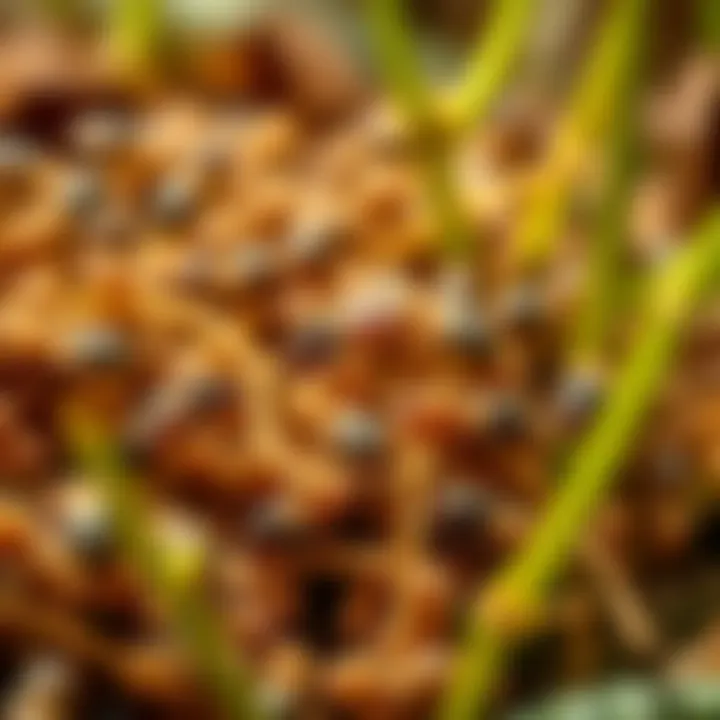
Once they emerge, larvae are often quite different from adult mites and can face numerous challenges as they scrabble to adapt to their environment. With each molt, they transform into nymph stages, gradually developing into adults. This cycle can last from a few weeks to a couple of months depending on environmental conditions like temperature and humidity.
Habitat Preferences
Habitat choice is another crucial aspect when it comes to understanding Orkin mites. They thrive in various environments, with a strong preference for moist soils rich in organic material, such as forest floors or compost piles. The presence of decaying plant matter not only provides nourishment but also offers much-needed shelter against predators and environmental extremes.
Also notable is their adaptability. In agricultural lands, Orkin mites can often be found in the rhizosphere, where they engage in vital nutrient cycling processes. By tunneling through the soil, they aerate it and help improve drainage, further enhancing plant health. More specifically, they are often seen in the upper layers of soil, where they can actively participate in the breakdown of organic matter.
In summary, the study of the biological characteristics of Orkin mites unveils their significance in agriculture. From their morphological traits, life cycle, to their habitat preferences, these elements combine to offer insights crucial for effective agricultural practices. With this understanding, farmers can better manage these mites, optimizing their beneficial aspects while controlling any potential downsides.
Impact of Orkin Mites on Agricultural Ecosystems
Understanding the impact of Orkin mites on agricultural ecosystems is crucial for farmers and agricultural enthusiasts alike. These diminutive creatures may often go unnoticed, yet their influence is substantial when it comes to soil health, crop productivity, and their dual roles as pests or beneficial allies in farming practices.
Role in Soil Health
Orkin mites play a pivotal role when it comes to maintaining soil health. These tiny organisms are involved in the decomposition process, which is vital for nutrient cycling. As they break down organic matter, they contribute to the formation of humus—a key component that enhances soil structure and fertility.
Moreover, they help in aerating the soil, creating pathways for air and water to penetrate more effectively. A healthy soil structure promotes better root development and stronger plant growth.
Their contribution extends to fostering a diverse soil microbiome. Various studies show that the presence of Orkin mites correlates with increased microbial activity in the soil, especially beneficial bacteria and fungi. This diversity is essential for a resilient ecosystem that can better withstand diseases and pests.
"Biodiversity is not just a buzzword; it is fundamentally connected to the health of our soils and, by extension, our crops."
Influence on Crop Productivity
The impact of Orkin mites on crop productivity cannot be understated. When in balance, these mites can aid in improved plant health. They help regulate the populations of other soil-dwelling organisms, including certain nematodes and pathogens that might be detrimental to crops.
Additionally, the enhancement of soil health leads to better nutrient availability. Nutrients that are made accessible through the breakdown of organic matter by Orkin mites may directly improve the growth and yield of various crops. For instance, crops like corn and soybeans could show marked improvements when grown in soils rich in Orkin mites.
However, it is important to note that an excessive population of Orkin mites could lead to negative consequences. Overpopulation can fuel competition within the soil and harm beneficial microorganisms, leading to issues that may compromise crop yield. This delicate balance highlights the need for monitoring mite populations to ensure they stay within beneficial ranges.
Potential Pests or Beneficial Allies?
The relationship between Orkin mites and farmers is complex. While they often support a thriving agricultural ecosystem, they can also be viewed as potential pests. Some species of Orkin mites may prey on plant roots or act as carriers for diseases, which puts them squarely in the pest category.
Yet, it is this very duality that makes them fascinating creatures. Recognizing when mites transition from allies to pests is key for effective management practices. Farmers can adopt measures such as biological controls to keep Orkin mite populations in check, thus ensuring they benefit rather than hinder crop production.
To truly leverage the advantages that Orkin mites offer, it’s important for agricultural professionals to familiarize themselves with the signs of a thriving mite population as well as indicators of trouble.
In essence, while Orkin mites can pose threats, their contributions to soil health and crop productivity are significant enough to regard them as essential players in agricultural ecosystems. With the proper management techniques, farmers can harness the benefits of these small yet mighty organisms effectively.
Identifying Orkin Mites
Identifying Orkin mites is a critical component in managing agricultural ecosystems effectively. Knowing their presence, signs of infestation, and differentiating them from other mite species provides farmers and enthusiasts with the tools they need to approach pest control strategically. Proper identification can mean the difference between healthy crops and a potential agricultural disaster; it sharpens the ability to make informed decisions about control measures, helping to maintain crop yield and soil health.
Signs of Infestation
Identifying the signs of Orkin mite infestations early can enable preemptive actions, which significantly mitigates potential damage to crops. Here are some key indicators:


- Webbing on Leaves: One of the most conspicuous signs is the thin webbing that may appear on foliage, often starting on the underside of leaves. This is not just unsightly; it can hinder photosynthesis.
- Discoloration of Foliage: Leaves might display yellowing, a sign of stress. Additionally, a mottled appearance could indicate feeding damage. These changes are critical signals suggesting that Orkin mites are munching away.
- Stunted Growth: Plants under attack may exhibit less vigorous growth. If you observe inconsistent growth patterns among plants, it might be time to check for mites.
- Dropping Leaves: An increase in fallen leaves may indicate a more serious infestation. As leaves age and die, the plant's vitality diminishes, leaving it more vulnerable to further damage.
- Presence of Mites: Given their minute size, physically spotting Orkin mites can be challenging. Utilizing a magnifying glass might help. Look for tiny, moving dots that are reddish or yellowish in color.
It’s essential to regularly inspect crops to catch these signs early, enabling a timely response to any potential infestation.
Differentiating from Other Mites
With several mite species impacting agriculture, knowing how to differentiate Orkin mites from their counterparts is paramount. Here are some traits to focus on:
- Size & Color: Orkin mites typically range from 0.5 to 1 millimeter in size. Their color varies from pale to reddish, which can be mistaken for spider mites. But remember, their size remains slightly smaller compared to many other species.
- Habitat Preference: Orkin mites can be found predominantly in soil, unlike some other mites that dwell primarily on plant surfaces. This habitat preference can help narrow down identification based on where they are found.
- Feeding Patterns: While many mites feed on plant sap, Orkin mites can also feed on decomposing organic matter. This behavior can set them apart, as they contribute to soil health in addition to potentially causing harm to live plants.
- Webbing Characteristics: While spider mites produce fine webbing on plants, Orkin mites are less likely to create extensive webs, making this an important distinction.
To get a more detailed understanding, consider visiting resources like Wikipedia's Mite page or articles from agricultural extension programs available on government sites like *.gov.
Recognizing the signs of infestation and understanding the unique characteristics of Orkin mites versus other mites can empower farmers and enthusiasts alike to maintain healthier crops and develop effective management strategies.
Management Strategies for Orkin Mites
In any agricultural practice, managing pest populations is a paramount concern. With the unique role that Orkin mites play in the ecosystem, their management becomes equally critical. Properly addressing Orkin mite populations can lead to improved crop health and soil vitality. This section explores various strategies to expertly manage these little creatures, providing farmers and agricultural enthusiasts with the practical knowledge required to make informed decisions.
Cultural Control Methods
One of the foundational pillars in pest management involves cultural control methods. These strategies focus on altering farming practices to create an environment less conducive to mite proliferation. Here are a few effective cultural practices:
- Crop Rotation: Changing the types of crops grown in a particular field can disrupt the life cycle of Orkin mites, reducing their populations over time.
- Soil Management: Healthy soil promotes strong plant growth, which can make crops less susceptible to mite infestation. Practices like composting and using cover crops enhance soil biology.
- Water Management: Proper irrigation practices are crucial. Wet conditions can favor the growth of mite populations, whereas moderate and targeted irrigation may limit their spread.
Cultural strategies are often more enduring than chemical methods, offering a sustainable approach that can sidestep resistance issues.
Biological Control Agents
Using biological control agents brings a more environmentally friendly approach to mite management. This tactic introduces natural enemies of Orkin mites to the ecosystem, helping to keep their populations in check. Some notable agents include:
- Predatory Mites: This group includes species like Phytoseiulus persimilis, which feast on Orkin mites, providing a natural form of pest control.
- Parasitic Wasps: These tiny wasps can lay their eggs in or on Orkin mites, resulting in the death of the mite larvae, thereby reducing numbers efficiently.
- Entomopathogenic Fungi: Certain fungi can infect and kill Orkin mites. This method not only manages mite populations but also fits well within organic farming practices.
Utilizing biological agents encourages a healthier ecosystem, promoting biodiversity and reducing the reliance on chemical solutions.
Chemical Control Options
While cultural and biological approaches are effective, there might be situations demanding a more immediate solution, which is where chemical control options come into play. It’s essential to consider chemicals as a last resort due to environmental impact, but when needed, using the right products is crucial:
- Acaricides: These are specifically designed for mite control. Using targeted acariicides can significantly reduce Orkin mite populations with minimal impact on beneficial species.
- Insecticidal Soap: This product can be an effective tool when applied correctly. It works by suffocating mites upon contact, but timing is essential for effectiveness.
- Neem Oil: Derived from the seeds of the neem tree, this organic insecticide can disrupt the life cycle of Orkin mites, making it an appealing option for those practicing sustainability.
It is vital to always follow manufacturer guidelines to ensure the safe application of chemical treatments, minimizing effects on the environment.
Sustainability Considerations
Sustainability in agriculture is not a mere buzzword; it is the essential framework guiding modern farming practices. The focus on sustainability considers various dimensions, from the preservation of natural resources to maintaining biodiversity within ecosystems. Orkin mites, often seen as minor players in the agricultural grand scheme, have substantial implications in promoting sustainable practices. Understanding their role enriches both agricultural productivity and conservation goals.
Impact on Biodiversity
Biodiversity encompasses the variety of life in a given ecosystem, which is crucial for resilience against pests and diseases. Orkin mites play a dual role here—acting as both beneficial organisms and potential pests depending on their population levels and management practices.
- Predators and Prey: They are integral parts of the food web, serving as prey for larger organisms, while also preying on some soil-borne pests. This balance helps regulate pest populations naturally.
- Soil Structure and Health: By breaking down organic material, Orkin mites help to improve soil structure and nutrient content, feeding into a healthier ecosystem. Improved soil health leads to increased water retention and better crop resilience.
- Indicator Species: Their presence can indicate overall ecosystem health. A diverse population of mites typically suggests favorable conditions within the soil environment, promoting more diverse agricultural outputs.
Integrating Orkin Mites into Sustainable Practices
Successfully integrating Orkin mites into sustainable agricultural practices requires a mindful approach. Here are several strategies to consider:
- Promoting Their Habitat: Farmers can create conditions where Orkin mites thrive, such as leaving crop residues and minimizing soil disturbance. This promotes a balanced ecosystem where beneficial organisms can populate.
- Crop Rotation and Diversity: Planting a variety of crops can support a broader spectrum of mite species. This can enhance soil health and reduce the chances of pest outbreaks, contributing to decreased reliance on chemical controls.
- Monitoring and Assessment: Implementing regular monitoring systems to assess mite populations can inform farmers how to intervene effectively. Utilizing technology such as soil sensors can be instrumental in managing mite dynamics.
"In agriculture, every small organism can tilt the scales of the ecosystem. Emphasizing the role of Orkin mites is critical in both understanding and applying sustainable farming practices."
The integration of Orkin mites fosters a symbiotic relationship with agriculture, ensuring that farming can move towards sustainability while benefiting from the natural control mechanisms that these tiny creatures provide.
Research and Future Directions
The exploration of Orkin mites is not static; it evolves as new studies and technologies emerge. These advancements not only enhance our understanding of this tiny yet significant organism but also hold the key to optimizing agricultural productivity and sustainability. An ongoing assessment of their role in crop management can yield insights that are both innovative and practical for farmers and agricultural enthusiasts alike.
Emerging Studies on Orkin Mites
Recent research into Orkin mites has focused on their ecological roles, especially as they relate to soil health and crop productivity. Studies have been initiated to investigate their interactions with various soil microorganisms. For instance, some researchers are examining how Orkin mites influence the population dynamics of bacteria and fungi, which are essential for nutrient cycling.
One noteworthy project originates from a university agricultural science program, which studies the negative and positive influences of Orkin mites on different crop species. Preliminary findings suggest a dual role, where some mite species may act as pests under certain conditions while providing pest control by preying on harmful insects. This complexity necessitates further examination of their habitat preferences and behavior in various environmental contexts.
- The collaboration between universities and agricultural firms has proved fruitful.
- Extensive field trials have provided rich data that could inform pest management strategies.
- Additionally, studies have started to monitor genetic variations among Orkin mites, aiming to understand their adaptive capabilities in changing agricultural landscapes.
Emerging studies like these are not just gathering dust on shelves; they are vital to rethinking pest control strategies, making it essential for farmers to stay informed about the latest developments in this field.
Technological Advancements in Monitoring
New technologies are becoming ever more integral in the observation and management of Orkin mites. With innovations such as remote sensing and imaging technologies, agricultural professionals can now detect mite populations and monitor their movements more accurately than ever before. This tech-savvy approach enables farmers to act proactively rather than reactively, an important shift towards sustainable farming practices.
Moreover, the application of artificial intelligence (AI) in agriculture has started to gain traction. AI algorithms can predict mite infestations by analyzing data from multiple sources, including weather patterns and previous infestation records. This predictive capability helps in timely decision-making, ensuring that crops remain healthy while minimizing unnecessary pesticide use.
Utilizing mobile applications that integrate machine learning is also on the rise. These apps allow farmers to upload images of suspected mite infestations for instant feedback and identification. This immediacy empowers farmers, turning the tide in favor of doing more with less.
"The future of agriculture lies in its ability to adapt quickly to changes, and Orkin mites offer a perfect case study on leveraging research and technology together."
End
Wrapping it all up, the issue of Orkin mites in agriculture is not just a minor footnote in the larger agricultural narrative—it is a compelling saga that deserves attention. These tiny creatures play a significant role in soil dynamics and crop health. Recognizing their dual nature as both potential pests and indispensable allies can reshape how farmers approach crop management strategies. Understanding their impact helps in fostering a more balanced ecosystem.
Recap of Orkin Mites' Role in Agriculture
To revisit the crux of the matter, Orkin mites contribute to both beneficial and detrimental aspects of agricultural systems. On one hand, they enhance soil health through their activities in nutrient recycling, promoting plant growth and supporting the broader microfauna that thrive in a healthy soil structure. On the flip side, if their populations spiral out of control, they can become detrimental, affecting crop yields and health. This demonstrates the delicate balance farmers must maintain; by monitoring and managing these tiny organisms, they can harness their benefits while mitigating potential risks.
- Enhancements to soil structure: They help by breaking down organic matter, which leads to improved aeration and water retention.
- Impacts on crop productivity: Through their natural actions, they can help or hinder the overall health of crops, depending on their management.
- Role in the ecosystem: They fit into the larger food web, indicating their importance not just to farmers, but to the entire agricultural landscape.
Call for Continued Awareness and Research
The research landscape surrounding Orkin mites is still evolving, and continuing studies are crucial. As agricultural challenges grow, especially with climate change and pest resistance, the need for fresh perspectives and innovative management strategies becomes imperative. Emphasizing vigilance and ongoing exploration can empower farmers to adopt practices that enhance sustainability.
Moreover, increased awareness about these mites should parlay into educational programs targeting farmers and agricultural professionals alike. By sharing insights and findings, industry stakeholders can collaborate more effectively, ensuring that the wealth of knowledge generated doesn’t go to waste.
"Understanding the complex interplay between Orkin mites and their environment is fundamental for future agricultural sustainability."
Investing in research could yield new ways to effectively utilize Orkin mites or combat their harmful impacts while promoting biodiversity. In this light, the journey of understanding Orkin mites isn't just a niche topic; it's a critical endeavor for modern agriculture. As we broaden our knowledge, we can ensure these small creatures contribute positively to our farming systems, creating a future where agriculture remains resilient, productive, and sustainable.